
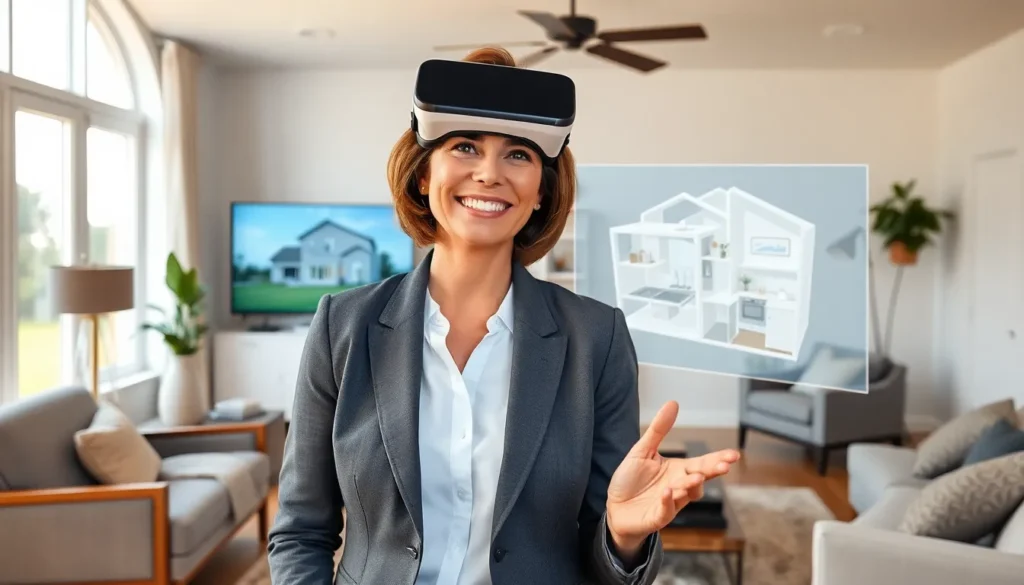
Imagine stepping into your dream home without leaving your couch. With virtual reality in real estate, that fantasy is now a reality. This cutting-edge technology is transforming how buyers explore properties, making house hunting feel more like a thrilling video game than a tedious chore.
Gone are the days of awkward open houses and endless paperwork. VR lets potential buyers stroll through homes, visualize spaces, and even rearrange furniture—all while sipping coffee in their pajamas. It’s not just about convenience; it’s about creating an immersive experience that helps buyers make informed decisions.
Overview of VR for Real Estate
Virtual reality (VR) is reshaping real estate interactions, making property tours more accessible and convenient. Buyers can now view listings without leaving their homes. Engaging virtual walkthroughs showcase properties, allowing prospects to envision living in those spaces.
Several features enhance customer experiences. Customizable layouts enable users to visualize potential changes, such as furniture arrangement and decor options. Realistic graphics make properties come alive, giving buyers a true sense of space.
Statistics support the growing trend, with 74% of agents reporting an increase in buyer interest when VR is utilized. Potential buyers often engage with listings more thoroughly when immersive technology is involved.
VR creates opportunities for real estate companies as well. Agents can record virtual tours and save time by avoiding unnecessary appointments. This technology helps sellers market their properties dynamically, attracting a larger audience through engaging visual content.
Furthermore, VR aids in identifying buyer preferences. Analytics tools allow agents to track user interactions within virtual tours, providing insights into popular features and styles.
Adopting VR technology showcases a commitment to innovation in the real estate sector. Companies embracing this approach gain a competitive edge, fostering trust and satisfaction among clients. They can cater to remote buyers, expanding their market reach significantly.
VR offers unique advantages for both buyers and sellers. By streamlining the property search process, it enhances communication and interaction, thus transforming how real estate transactions occur.
Benefits of VR in Real Estate
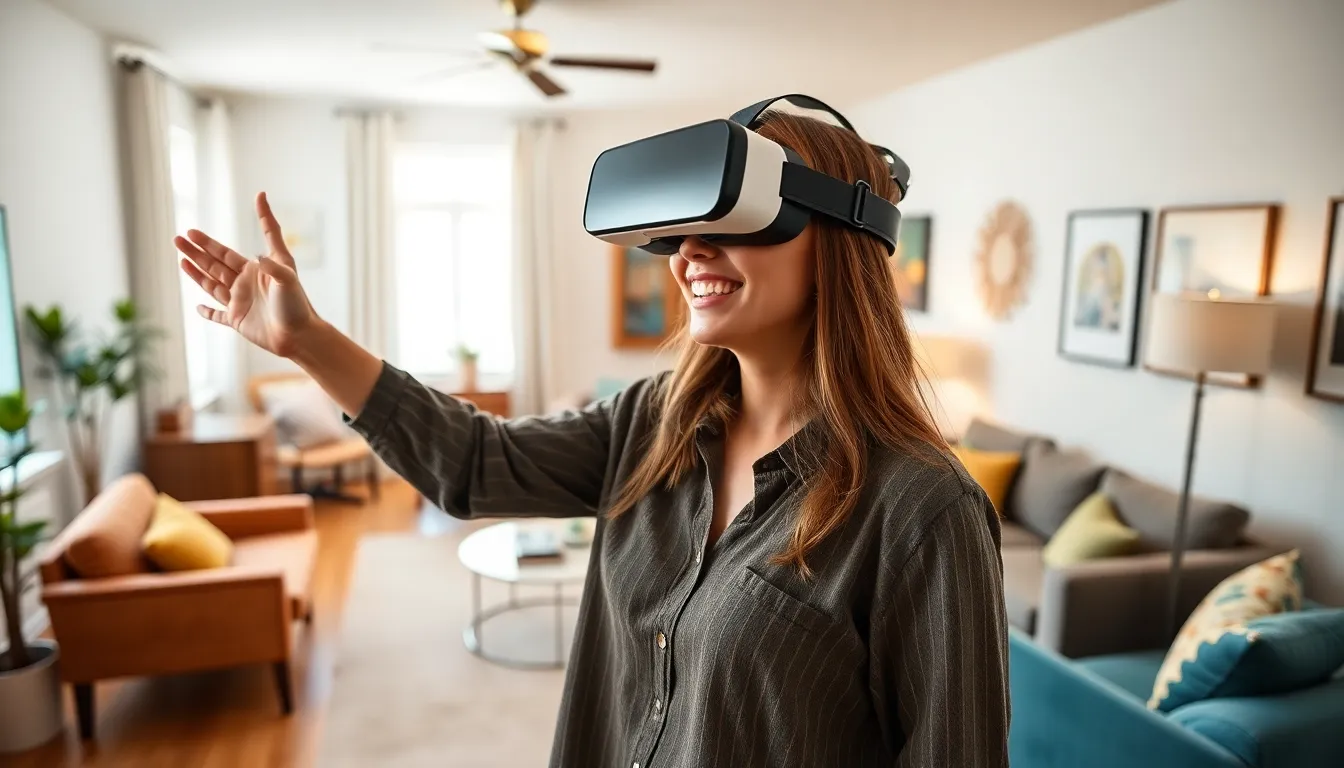
Virtual reality transforms how buyers and sellers experience the real estate market. Several key benefits emerge from its implementation.
Enhanced Property Visualization
VR offers immersive experiences for potential buyers, allowing them to explore homes in detail. Interactive features enable users to visualize how furniture fits into spaces, creating a personal connection with properties. Statistics indicate that 74% of real estate agents observe heightened buyer interest when using VR, showcasing its effectiveness. Buyers step into realistic environments that facilitate informed decision-making, ultimately streamlining the home-buying process. Engaging visuals maintain attention and promote deeper consideration of listings.
Improved Client Engagement
Client engagement increases significantly through VR technology. Virtual tours replace traditional open houses, letting buyers browse from anywhere without scheduling appointments. Agents report a 27% increase in engagement levels, highlighting the effectiveness of virtual walkthroughs. Personalization options include choosing layouts and styles, making the experience feel unique for each buyer. By adapting to preferences shown during VR tours, agents can tailor their approach, enhancing overall satisfaction. This innovative method not only captures interest but also fosters a stronger connection between clients and properties.
VR Technologies in Real Estate
VR technologies significantly enhance the real estate experience for buyers and sellers. By integrating advanced tools, real estate professionals can offer more engaging and informative interactions.
3D Modeling and Simulation
3D modeling creates detailed representations of properties, allowing potential buyers to explore layouts virtually. These models offer an accurate depiction of dimensions and spatial relationships, aiding in visualization. Customization features enable clients to see how their furniture fits in various rooms. Realistic textures and lighting improve understanding of a property’s design. Statistics indicate that 74% of agents report increased interest from buyers exposed to 3D models. Overall, 3D simulations provide a compelling way to assess homes without physical visits.
Virtual Tours and Walkthroughs
Virtual tours provide immersive experiences for prospective buyers. Engaging walkthroughs allow users to navigate properties at their own pace, helping them envision living in the spaces. Users can interact with features, changing layouts and seeing properties from different angles. Enhanced graphics make these environments feel lifelike and inviting. As a result, 27% of agents notice higher engagement levels with virtual tours compared to traditional methods. Virtual tours revolutionize property viewing, making it convenient and accessible for all involved.
Challenges of Implementing VR
Implementing VR in real estate presents unique challenges that companies must navigate.
Costs and Investment
Initial costs for VR technology can be significant. Hardware, software, and development resources require substantial investment. Market research shows the average expense for setting up VR systems ranges from $15,000 to $50,000 depending on the level of sophistication. While many companies recognize the long-term benefits, upfront costs can deter smaller firms. Training staff on VR utilization adds to the expenses as well. Agents may require specialized knowledge to create immersive experiences, leading to additional training sessions. Despite the high initial investment, properties marketed through VR often attract more buyers, resulting in potential returns on investment.
Technical Limitations
Technical limitations pose a challenge for VR implementation. Not all properties can be effectively represented in a digital format due to complex architectural features or outdated construction styles. Users may experience motion sickness when viewing VR content, limiting the diversity of potential buyers who can engage with this technology. Additionally, issues related to internet connectivity can undermine the quality of virtual tours, leading to frustration among users. Companies must also keep up with rapid technological advancements to maintain a competitive edge, often leading to costly updates and revisions. As these limitations persist, real estate firms must balance the benefits of VR with these technical obstacles.
Future Trends in VR for Real Estate
Emerging technologies in virtual reality (VR) are shaping the future of the real estate industry. Innovations such as artificial intelligence integration enhance the VR experience, creating more personalized property tours. Buyers can expect tailored recommendations based on their preferences, making property searches more efficient.
Augmented reality (AR) is also gaining traction alongside VR, allowing users to overlay digital information onto real-world environments. This feature helps potential buyers visualize modifications, such as new paint colors or furniture arrangements, fostering more creativity in design choices. With AR, clients experience properties interactively, viewing them not only as physical spaces but also as potential homes.
The use of VR in real estate marketing continues to evolve, with drone technology providing aerial views of properties. High-definition aerial footage offers unique perspectives, helping agents showcase large estates and scenic properties effectively. Clients benefit from comprehensive visualizations, boosting engagement with listings.
Data analytics play a crucial role in understanding consumer behavior. Tracking user interactions within virtual tours reveals preferences and trends, assisting agents in refining their marketing strategies. Insights generated from analytics could lead to homes being marketed more successfully, meeting buyer demands directly.
As the demand for immersive experiences grows, collaboration between real estate firms and tech companies will rise. These partnerships can accelerate the development of cutting-edge VR tools. Advanced features such as social sharing capabilities may enable prospective buyers to easily share tours with family and friends.
Integration of virtual reality into real estate is not without its challenges. Continuous training on new technologies remains essential for agents to deliver exceptional service. Keeping pace with technological advancements ensures that firms remain competitive in the evolving landscape of real estate marketing.
The integration of VR in real estate is undeniably changing the game for both buyers and sellers. By offering immersive experiences and convenient access to properties, it streamlines the house-hunting process. As technology continues to advance, the potential for even more engaging and personalized experiences will only grow.
Real estate professionals who embrace VR can enhance their marketing strategies and better cater to client needs. While challenges exist, the benefits of adopting this technology far outweigh the drawbacks. Ultimately, VR not only transforms how properties are showcased but also elevates the overall experience of buying and selling real estate.


