
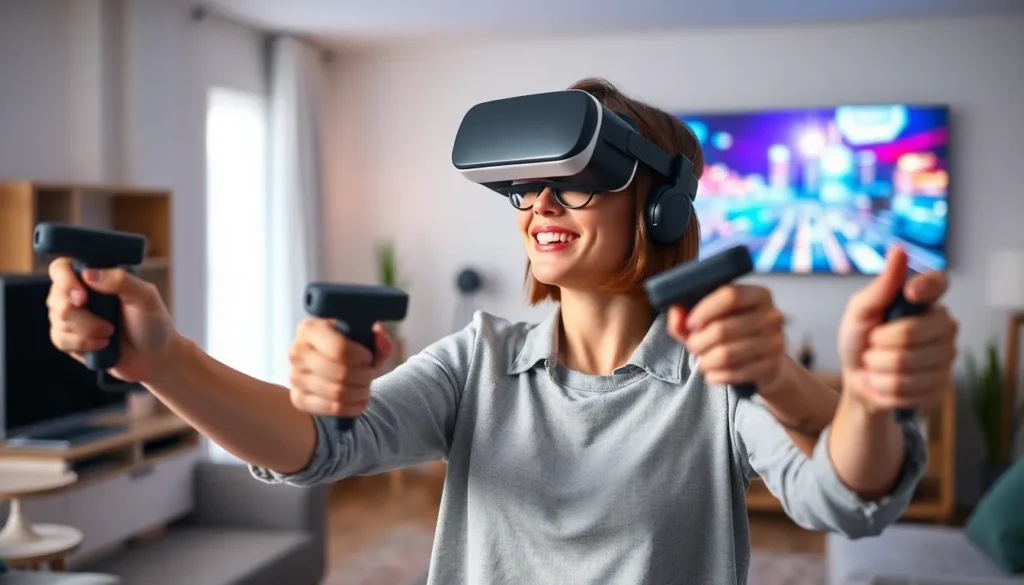
In a world where reality can sometimes feel like a Monday morning meeting, virtual reality (VR) equipment swoops in like a superhero with a cape made of pixels. It’s not just for gamers anymore; it’s transforming how everyone—from architects to educators—interacts with their environment. Imagine exploring ancient ruins or battling aliens without leaving your living room. Sounds like a sci-fi movie, right?
Overview of VR Equipment
Virtual reality equipment consists of hard and software components designed to create immersive experiences. Headsets serve as the primary interface, delivering visuals and audio to the user. Popular options include the Oculus Quest, HTC Vive, and PlayStation VR, each offering various features and capabilities.
Controllers enhance interactivity, allowing users to navigate and manipulate VR environments. Examples of controllers include handheld devices that track movements and gestures, providing tactile feedback. Tracking systems also play a crucial role, utilizing sensors and cameras to monitor user movements, ensuring accurate and responsive experiences.
Accessories can augment VR setups, providing additional comfort and functionality. Items such as VR gloves improve hand tracking, while external motion sensors enhance spatial recognition. Audio equipment, including headphones, delivers immersive soundscapes that elevate the overall experience.
Software platforms form another essential element of VR equipment. Many applications cater to specific sectors, such as education and design. Developers create various content types, ranging from simulations to educational tools, that leverage the immersive potential of VR.
Connectivity options vary depending on equipment; wired systems often provide more stable connections. Wireless setups offer flexibility but may sacrifice some performance. Ensuring compatibility between hardware and software can optimize user experiences.
Maintenance of VR equipment is necessary for longevity and performance. Regular updates to software enhance functionality and security. Cleaning and properly storing hardware can prevent wear and tear, maintaining the quality of the immersive experience.
Types of VR Equipment
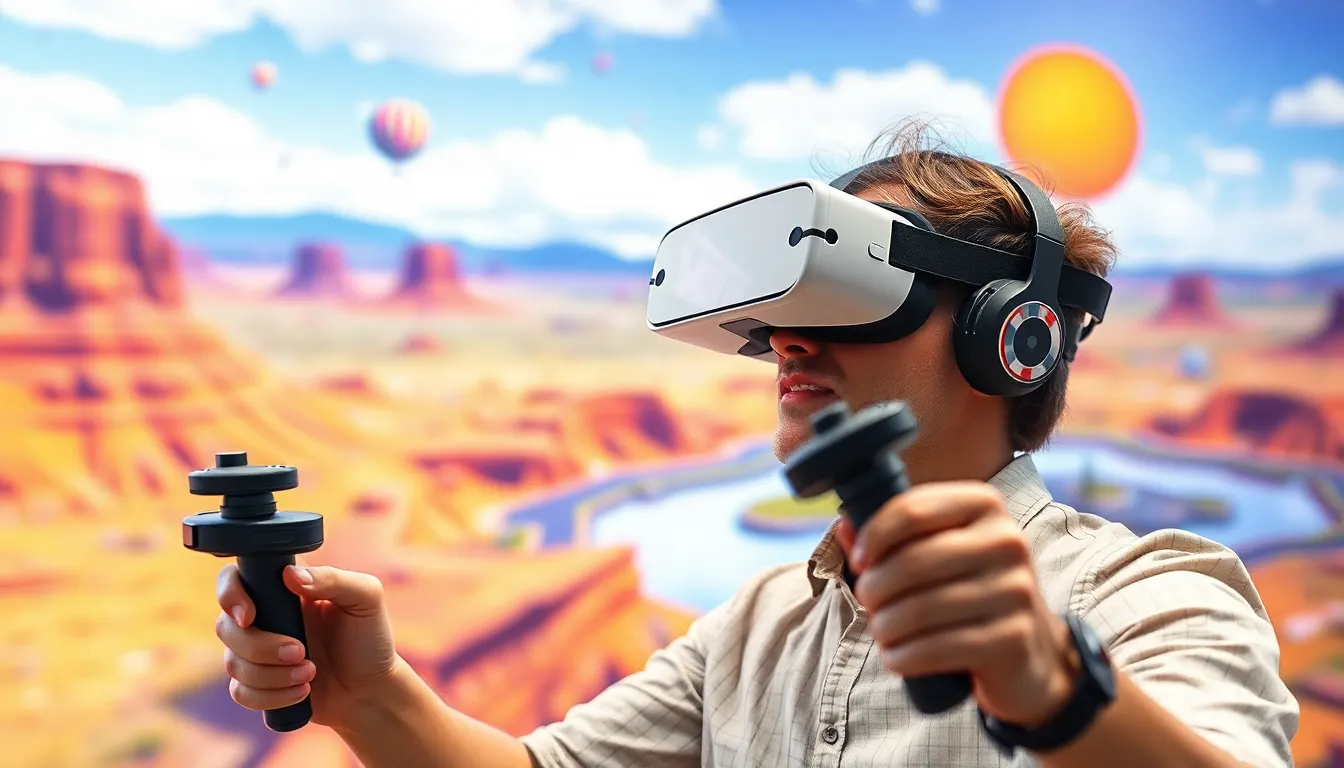
Virtual reality equipment consists of various components that work together to create immersive experiences. Understanding the different types enhances user engagement in virtual environments.
Head-Mounted Displays
Head-mounted displays (HMDs) serve as the primary interface for VR users. Popular options include the Oculus Quest, HTC Vive, and PlayStation VR. Each headset offers unique features, such as resolution, field of view, and refresh rate, affecting overall visual quality. These devices connect to a computer or console, enabling users to experience virtual landscapes and scenarios. Comfort and fit contribute to the overall experience, making it essential to consider individual preferences when selecting an HMD.
Motion Controllers
Motion controllers enhance interaction by allowing users to manipulate objects within virtual environments. Controlling movements and actions becomes intuitive using devices like the Oculus Touch and Valve Index controllers. These handheld devices incorporate sensors that track movement in real-time, rendering a seamless connection between the user and their virtual experience. Many controllers come equipped with buttons and triggers, providing additional functionality for various applications. Accurate tracking ensures that gestures translate effectively to the digital world.
Tracking Systems
Tracking systems play a crucial role in accurately capturing user movements. Different technologies exist, such as optical, inertial, and magnetic tracking, each with specific advantages. Optical tracking relies on external sensors placed in the environment, ensuring high precision in spatial awareness. Inertial systems use onboard sensors to detect motion, offering freedom of movement without external equipment. Magnetic tracking combines these methods for enhanced performance. Effective tracking systems ensure immersive experiences, allowing users to navigate virtual spaces seamlessly while maintaining a sense of presence.
Popular VR Equipment Brands
Several brands dominate the VR equipment market, each bringing unique offerings that cater to various user needs.
Oculus
Oculus stands out with its Quest and Rift series, known for their user-friendly interfaces. The Quest 2 combines wireless freedom with powerful performance, appealing to customers seeking convenience. It features a high-resolution display and extensive game library. Oculus also emphasizes social experiences, allowing friends to connect in virtual environments. Its intuitive design and advanced technology make Oculus a popular choice among both casual and serious gamers.
HTC Vive
HTC Vive targets serious gamers and professionals with its Vive Pro and Vive Flow models. The Vive Pro offers high visual fidelity and tracking accuracy, creating rich immersive experiences. Its robust hardware supports demanding applications, making it suitable for architectural visualization and training simulations. Meanwhile, the Vive Flow provides portability without sacrificing quality, attracting users who want VR on the go. HTC’s commitment to innovation keeps it at the forefront of the VR industry.
PlayStation VR
PlayStation VR remains a significant player in the console gaming world. Designed specifically for PlayStation consoles, it’s highly accessible for existing gamers. The headset features an extensive library of exclusive titles, enhancing the gaming experience. Its user-friendly setup allows for quick connections and easy navigation. Additionally, the recent PSVR 2 headset improves resolution and tracking capabilities, ensuring a competitive edge in the evolving VR landscape.
Key Features to Consider
Selecting the right VR equipment involves understanding several key features. He or she must consider resolution, comfort, and compatibility when making a choice.
Resolution and Display Quality
Resolution directly affects the clarity of virtual environments. Higher resolutions provide sharper images, which enhance immersion. Popular headset options come with resolutions that range from 1080p to 4K. For example, the Oculus Quest 2 features a resolution of 1832 x 1920 per eye, delivering impressive visual quality. Display refresh rates also play a crucial role; higher rates reduce motion blur and enhance fluidity in action sequences. Aiming for a headset with at least 90Hz refresh rate benefits fast-moving experiences distinctly.
Comfort and Ergonomics
Comfort significantly influences extended VR sessions. Headsets should distribute weight evenly to prevent fatigue. Adjustable straps and padding contribute to a better fit. The HTC Vive Pro, for instance, uses a cushioned design that accommodates various head sizes comfortably. Additionally, built-in audio solutions promote a more engaging experience without external distractions. Users should seek equipment that allows for airflow to minimize heat build-up, ensuring a more enjoyable experience overall.
Compatibility and Software
Compatibility with existing systems and software greatly enhances usability. Check if the VR headset works seamlessly with gaming consoles, PCs, or mobile devices. The PlayStation VR, for example, connects easily with PlayStation consoles and boasts an extensive library of compatible titles. Software updates often improve features and performance, making it essential to choose a brand that prioritizes support. Ensuring that the headset supports popular VR applications and games maximizes the potential for immersive experiences.
The world of virtual reality equipment is rapidly evolving, offering a wealth of options for users across various fields. From gaming to professional applications, the right VR setup can significantly enhance experiences and productivity.
Selecting the ideal headset and accessories involves understanding individual needs and preferences. Factors like resolution comfort and compatibility play a vital role in ensuring an immersive experience.
As technology continues to advance, staying informed about the latest developments in VR equipment will empower users to make the best choices. Embracing this technology can open up new dimensions of interaction and creativity.


