
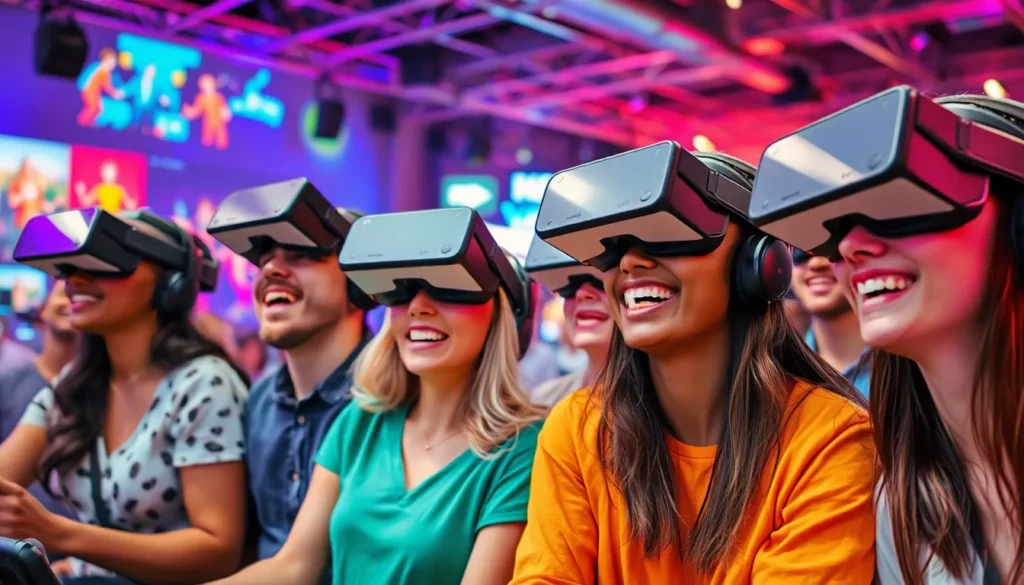
Imagine a world where you can hang out with friends across the globe without leaving your couch. Welcome to the vibrant universe of VR communities, where the only limit is your imagination. Whether it’s slaying dragons in a fantasy realm or attending a virtual concert, these digital spaces are redefining how people connect and interact.
Overview of VR Community
Virtual reality communities foster connections among users worldwide. In these immersive environments, individuals can interact in real-time. Players collaborate on quests in fantasy realms, while concert-goers enjoy live events from their homes. Engaging experiences in VR range from social gatherings to competitive gaming.
Diverse platforms host these communities. Popular options include VRChat, Rec Room, and AltspaceVR. Each platform offers unique features catering to varied interests. Users can personalize avatars, participate in games, or join discussions on current events.
Participation in VR communities often enhances social skills. Users practice communication in dynamic settings. For some, this encourages friendships that transcend geographic barriers. Empathy develops through shared experiences, creating deeper connections.
Real-world applications emerge from these virtual interactions. Educational institutions adopt VR for collaborative learning. Businesses explore team-building simulations to improve productivity. Various groups create support networks, addressing mental health and loneliness.
Statistics reveal the growing importance of VR communities. According to a report by Statista, the global VR gaming market was valued at approximately $1.8 billion in 2021, with projections to reach $12 billion by 2024. The increasing user base demonstrates the potential of these digital spaces.
Overall, VR communities provide platforms for socialization, education, and collaboration. They adapt to user needs, making virtual reality an integral part of contemporary social interaction. Through exploration and innovation, these communities continuously evolve, offering boundless opportunities for engagement.
Key Platforms and Spaces
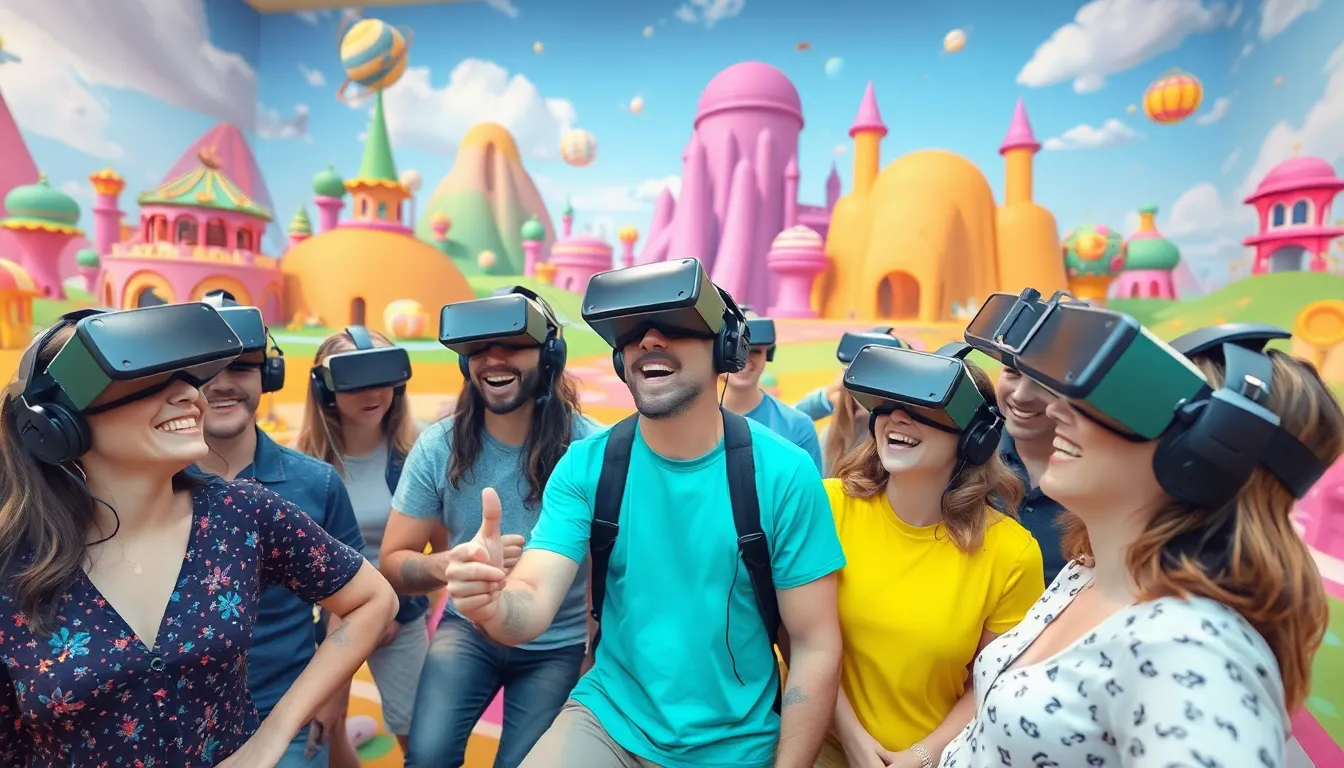
Numerous platforms host vibrant VR communities, each offering unique experiences.
Popular VR Platforms
VRChat stands out for its expansive universe, allowing users to create and share custom worlds. Rec Room enables friendly gatherings, supporting games like paintball and quest missions. AltspaceVR serves as a social hub, hosting events such as live shows or meetups. Other notable platforms include Horizon Worlds, which emphasizes creation, and Somnium Space, known for its real estate features. These platforms together shape dynamic social landscapes, attracting millions of users eager to explore and connect.
Community Features
Engagement in VR communities thrives through interactive features. Users personalize avatars, fostering unique identities among peers. Conversations flow seamlessly using voice chat and gestures, enhancing social connections. Events such as tournaments, workshops, and themed parties often bring users together for shared interests. Many platforms incorporate tools for building environments, facilitating creativity and collaboration. Additionally, some platforms offer moderation tools, ensuring safer experiences for members. These features collectively optimize user interaction, reinforcing a sense of belonging within the VR ecosystem.
User Engagement in VR Communities
User engagement within VR communities thrives on diverse social interactions and events that cater to various interests.
Social Interactions
Platforms such as VRChat and Rec Room facilitate rich social experiences. Users customize avatars, which enhances personal expression and identity within the community. Voice chat features create immersive dialogues, allowing individuals to connect authentically. Real-time interactions foster collaboration, enabling friends to strategize during gameplay or explore new environments together. Social dynamics in these communities often mirror real-life interactions, promoting deeper connections among participants. Data supports these observations, indicating that over 60 percent of users report improved interpersonal skills through regular participation in VR social settings.
Events and Gatherings
VR communities frequently host dynamic events to engage users. Concerts, game nights, and themed celebrations create opportunities for collective experiences. In platforms like AltspaceVR, users join discussions, workshops, or performances, expanding their social networks. These events often attract participants from around the globe, emphasizing the global reach of virtual communities. Scheduling regular gatherings keeps users returning and builds a continuous sense of excitement. With nearly 70 percent of users actively attending events, it highlights the importance of shared activities in fostering lasting relationships and a vibrant community atmosphere.
Benefits of Joining a VR Community
Joining a VR community brings numerous advantages, enhancing both social interactions and personal growth. Members gain access to unique experiences that transcend physical limitations.
Networking Opportunities
Networking opportunities abound within VR communities. Users connect with individuals from diverse backgrounds, creating friendships that extend beyond virtual boundaries. Engaging in themed events fosters collaborations on projects and interests. Many users leverage these connections for professional growth, sharing insights within niche markets. Events hosted by platforms like VRChat and Rec Room attract participants eager to exchange ideas. Approximately 70 percent of users actively attend such events, underscoring the importance of in-person interactions in virtual spaces.
Skill Development
Skill development represents another key benefit of VR communities. Participants regularly engage in activities that enhance communication and teamwork skills. Real-time collaboration challenges users to think critically and solve problems swiftly. Regular interactions often lead to increased confidence in social settings. Moreover, educational opportunities abound, with many communities offering workshops and tutorials. Users interested in programming or design can find resources to refine their skills. Nearly 60 percent of users report improved interpersonal skills from consistent community involvement.
Challenges within the VR Community
The VR community faces various challenges that can affect user engagement and experience.
Inclusivity Issues
Inclusivity proves a significant challenge within VR communities. Many platforms lack features catering to users with disabilities, limiting their participation. Diverse representations in avatars often remain inadequate, causing some users to feel misrepresented. Language barriers also exist, as not all platforms offer multilingual support. Approximately 90 percent of VR users are male, highlighting gender disparity issues. Addressing these inclusivity gaps is crucial for fostering a welcoming environment and enhancing community engagement.
Technical Barriers
Technical barriers pose another challenge for VR communities. Access to high-quality VR hardware often requires significant financial investment, making it less accessible for some users. Compatibility issues can arise with different devices, hindering player interaction across platforms. Additionally, users may encounter lag or connectivity issues, detracting from the immersive experience that VR offers. Reports indicate that nearly 30 percent of users experience technical difficulties during their VR sessions. Overcoming these barriers is essential for expanding community participation and ensuring a seamless user experience.
The rise of VR communities marks a significant shift in how individuals connect and interact in the digital age. These immersive environments not only break down geographical barriers but also foster meaningful relationships and collaborative experiences. With platforms offering unique features and events tailored to diverse interests, users can explore new realms of social engagement.
Despite challenges like inclusivity and technical barriers, the potential for growth within VR communities remains vast. By addressing these issues, the future of virtual reality can become even more accessible and enriching. As technology advances, the possibilities for connection and creativity in VR will continue to expand, making it an essential part of modern social interaction.


