

Imagine walking into your home and having it greet you like an old friend. Lights flicker on, the thermostat adjusts to your perfect temperature, and even your coffee machine knows you need a caffeine boost after a long day. Welcome to the world of smart home IoT, where your house isn’t just a structure but a high-tech companion ready to cater to your every whim.
In this digital age, the Internet of Things (IoT) transforms ordinary homes into intelligent living spaces. From voice-activated assistants to smart fridges that remind you when you’re out of milk, these gadgets make life easier and a bit more fun. So, buckle up as we dive into the fascinating realm of smart home technology, where convenience meets innovation and your home becomes the ultimate smart assistant.
Overview Of Smart Home IoT
Smart home IoT integrates various technologies to create intelligent living spaces. This system provides enhanced convenience through features designed to improve daily routines.
What Is Smart Home IoT?
Smart home IoT refers to a network of devices embedded with sensors that communicate over the internet. These devices include everything from smart thermostats to security systems. They enable users to control and monitor their homes remotely. Smart home IoT enhances user interaction by allowing automation of everyday tasks.
Key Components Of Smart Home IoT
Key components include devices, communication protocols, and cloud platforms. Devices may consist of smart lights, cameras, and appliances. Communication protocols ensure seamless data transfer between devices. Security is critical, employing encryption to protect user data. Cloud platforms store and analyze data, improving service delivery and enabling predictive functions.
Benefits Of Smart Home IoT
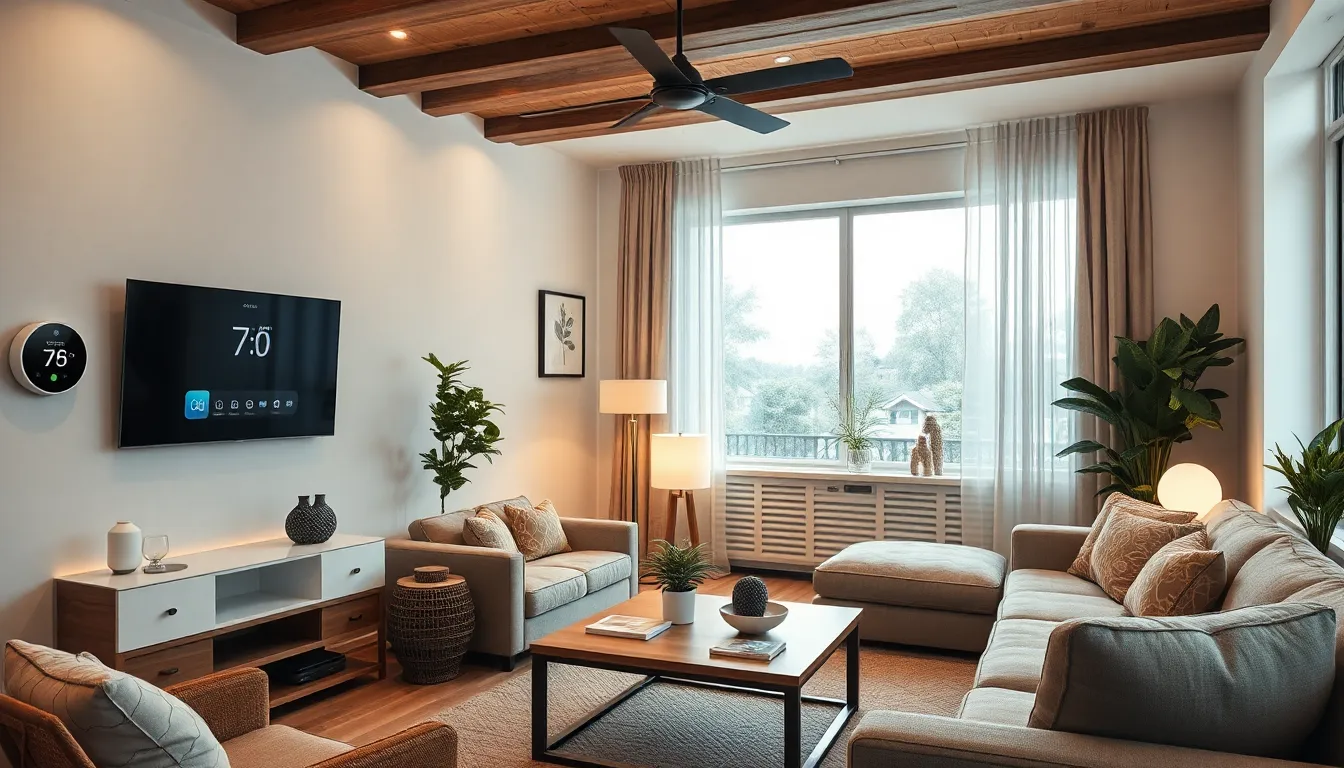
Smart home IoT brings numerous advantages, making life easier and more efficient. Users enjoy a variety of benefits, from improved convenience to enhanced energy savings.
Enhanced Convenience
Smart technology simplifies everyday tasks. Users can automate routines, such as adjusting lighting and temperature, creating a comfortable environment without manual effort. Remote control features provide access from any device, allowing oversight even when away from home. Smart appliances execute commands effortlessly, enhancing daily efficiency. Integration with virtual assistants further streamlines operations, delivering an intuitive experience. As a result, these technologies significantly reduce the time and energy spent on mundane chores.
Improved Energy Efficiency
Smart home IoT promotes energy efficiency through intelligent monitoring and control. Devices like smart thermostats optimize heating or cooling based on scheduled preferences, reducing unnecessary energy use. Users gain insights into their energy consumption patterns, enabling informed decisions about usage. Automated settings adjust power levels based on occupancy, minimizing waste when spaces are unoccupied. This approach often leads to reduced utility costs, illustrating the economic benefits of enhanced energy management. Overall, smart technology contributes to a more sustainable living environment while saving money.
Challenges And Concerns
Smart home IoT brings several challenges and concerns that potential users must address.
Security Issues
Security rank as a primary concern with smart home devices. Cyber attackers often target these systems due to potential vulnerabilities. Data breaches frequently occur, leading to unauthorized access to personal information. Users rely on strong passwords and regular software updates to mitigate this risk. Devices lacking robust security features increase the likelihood of being compromised. Moreover, a smart home network increases the points of entry for hackers, requiring vigilant monitoring. Public awareness about the importance of security remains crucial for safe adoption.
Interoperability Problems
Interoperability presents another significant challenge in smart home ecosystems. Many manufacturers create devices using proprietary technologies, leading to compatibility issues. Devices from different brands sometimes fail to communicate effectively, limiting user convenience. Thus, a seamless experience often requires multiple apps or platforms. Users encounter frustration when integrating systems that do not work together. Standardization across the industry could enhance compatibility, fostering a more unified smart home experience. Compatibility challenges hinder widespread adoption and diminish the perceived value of smart home IoT solutions.
Popular Smart Home IoT Devices
Smart home IoT devices significantly enhance home convenience and efficiency. Various types of devices cater to different needs, including smart speakers, thermostats, and lighting systems.
Smart Speakers
Smart speakers serve as versatile hubs for smart home control. Devices like Amazon Echo and Google Nest allow users to issue voice commands, controlling all connected devices effortlessly. They offer functionalities ranging from playing music to providing weather updates. Additionally, users can integrate various services such as home security and smart appliances, creating a seamless experience. Increased voice recognition technology ensures accurate responses, making smart speakers indispensable for modern living.
Smart Thermostats
Smart thermostats optimize energy usage while maintaining comfort. Devices like the Nest Learning Thermostat learn user preferences, adjusting heating and cooling schedules accordingly. They provide remote access via smartphone apps, allowing users to manage home temperature even when away. Energy-saving features alert users to unusual heating patterns, promoting efficiency. Adopting smart thermostats can lead to significant savings on utility bills, making them a popular choice among environmentally conscious homeowners.
Smart Lighting Systems
Smart lighting systems enhance ambiance and reduce energy costs. Options like Philips Hue and LIFX allow users to customize brightness and color through smartphone applications. Responding to schedules or voice commands, these systems create personalized lighting experiences. Users benefit from features such as automated timers and remote access, improving convenience. Smart lighting also integrates with security systems, simulating presence to deter intruders, thus enhancing home safety.
Future Trends In Smart Home IoT
Smart home IoT is set to evolve significantly as technology advances. Automation and artificial intelligence (AI) integration will play pivotal roles in this transformation.
AI Integration
AI technology enhances smart home solutions by enabling predictive analytics. Predictive algorithms anticipate user behaviors, adjusting settings automatically for maximum comfort and energy efficiency. Devices learn individual preferences through continuous data collection and analysis. Enhanced voice recognition systems will improve interaction, making devices more intuitive. Security measures will also become more sophisticated, employing AI to distinguish between normal activity and potential threats. Intelligent assistants will facilitate seamless multi-device communication, creating a more cohesive smart home ecosystem.
Increased Automation
Automation will increase, simplifying daily home operations. Users will experience effortless management of multiple tasks through interconnected devices. For instance, smart assistants can now schedule appliances to function at optimal times, conserving energy and reducing costs. Additionally, automated security systems will monitor environments continuously, alerting homeowners about unusual activity instantly. Smart home routines will evolve to adapt automatically based on user habits, eliminating the need for manual adjustments. Overall, increased automation in smart home IoT will enhance convenience while promoting sustainability.
Smart home IoT is reshaping how people interact with their living spaces. By integrating advanced technologies and devices, it offers unparalleled convenience and efficiency. As automation and AI continue to evolve, homes will become even more responsive to individual needs.
While challenges like security concerns and interoperability persist, the benefits of smart home technology are compelling. Users can enjoy enhanced comfort, energy savings, and improved safety. The future promises a seamless, intelligent home environment that simplifies daily routines and promotes sustainable living.
Embracing smart home IoT not only enhances everyday life but also paves the way for a more connected and efficient future.


