

Imagine slipping on a headset and suddenly finding yourself in a world where the mundane transforms into the extraordinary. Real world VR is no longer just for gamers or tech enthusiasts; it’s a powerful tool reshaping how we experience everything from education to travel. It’s like having a magic portal in your living room, ready to whisk you away to places you’ve only dreamed of—without the hassle of airport security.
In this brave new world, virtual reality isn’t just about fun and games. It’s revolutionizing industries, enhancing training programs, and even helping people conquer their fears. So grab your headset, because the future is here, and it’s more immersive than ever. With real world VR, the only limit is your imagination—and maybe your Wi-Fi connection.
Understanding Real World VR
Real world virtual reality (VR) creates immersive experiences, impacting various fields like education and healthcare. Users engage with this technology, allowing for exploration and learning in innovative ways.
Definition and Overview
Real world VR refers to immersive simulations that blend digital elements with real environments. This technology enables users to interact with three-dimensional virtual elements in a realistic context. Applications vary from training programs to interactive educational experiences. Recognizable examples include virtual classrooms, therapeutic environments, and simulation-based learning.
Key Features of Real World VR
Key features of real world VR enhance user interactions and experiences. High-resolution graphics provide lifelike visuals, immersing users in their environments. Motion tracking ensures accurate representation of movements, allowing users to navigate freely. Haptic feedback systems generate physical sensations, enriching user immersion. Additionally, accessibility features enhance usability for diverse audiences.
Applications of Real World VR
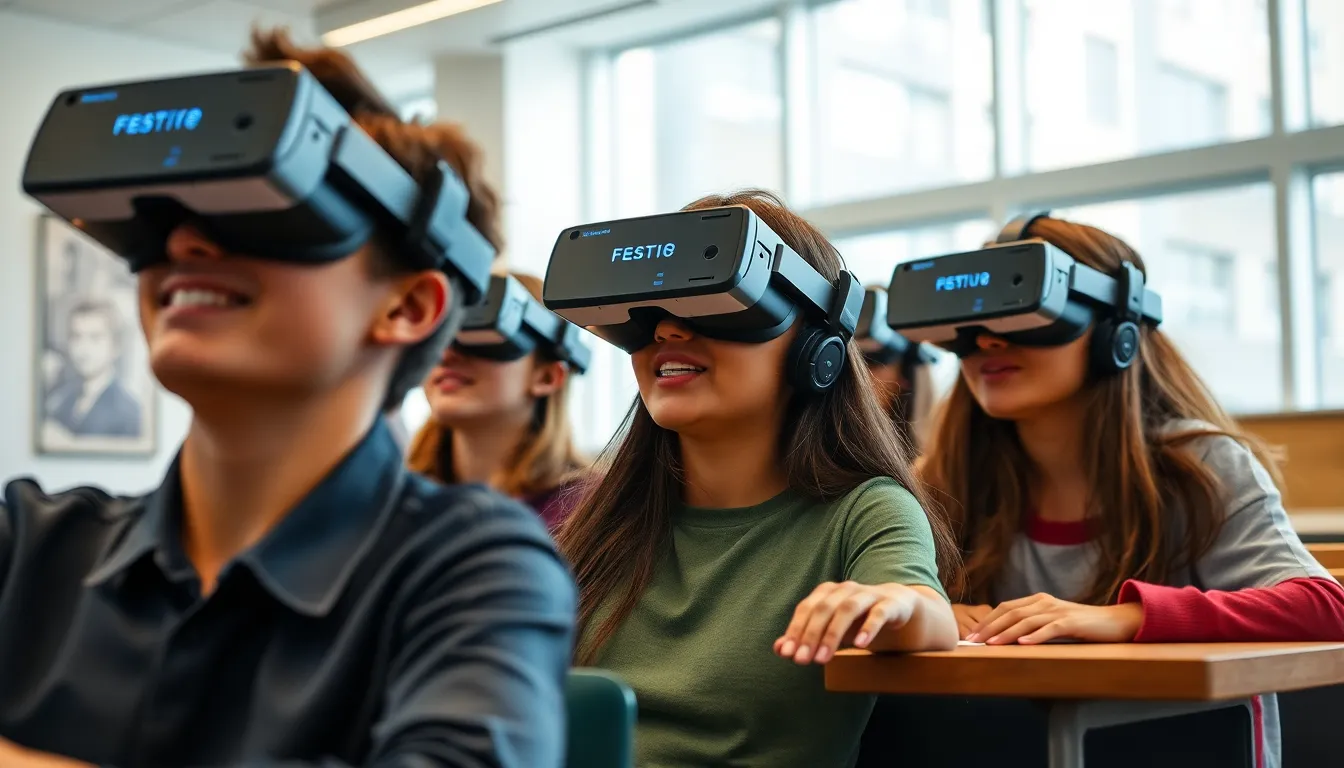
Real world VR finds applications across numerous industries, transforming experiences in education, healthcare, and beyond.
Education and Training
Real world VR enhances educational experiences by creating immersive learning environments. Students engage in simulations that replicate real-world situations, enabling hands-on learning. For example, medical students perform virtual surgeries, gaining skills without the risks associated with traditional training. Additionally, teachers utilize VR to transport learners to historical events, enriching their understanding. Training programs in various sectors leverage VR for safety drills, preparing employees for emergency situations. Such innovative educational methods foster retention and deepen knowledge.
Healthcare Innovations
Real world VR revolutionizes healthcare by improving treatment and training methodologies. Patients use VR for exposure therapy, addressing fears and anxieties in a controlled setting. Medical professionals utilize VR simulations to refine surgical techniques, leading to higher proficiency rates. Furthermore, VR aids in pain management, providing distraction during uncomfortable procedures. Researchers explore its potential in physical rehabilitation, encouraging movement and engagement. Overall, these advancements illustrate how VR enhances both patient experience and provider education in the healthcare sector.
Benefits of Real World VR
Real world VR offers transformative benefits across various sectors. Its potential lies in enhancing experiences, boosting accessibility, and advancing training methodologies.
Enhanced Learning Experiences
Enhanced learning experiences emerge through immersive environments. Students engage with interactive simulations, facilitating deeper understanding of complex subjects. For instance, medical students practice virtual surgeries, gaining practical skills without the risks associated with real patients. Engaging in history lessons through virtual time travel allows learners to connect with material on a personal level. Educators utilize VR to accommodate different learning styles, ensuring all students thrive in the classroom. Experiential learning through VR signifies a significant leap beyond traditional methods, making education more dynamic and relevant.
Improved Accessibility
Improved accessibility characterizes real world VR’s impact on various demographics. Users with disabilities benefit from immersive experiences that might otherwise be difficult to access. Virtual museums enable exploration without physical travel, providing cultural exposure to everyone regardless of limitations. Schools utilize VR as a tool for distance learning, connecting students who are unable to attend in-person classes. Accessibility features, including subtitles and voice commands, enhance user experience. Empowering individuals through technology enables inclusive participation in educational and recreational activities. As a result, everyone experiences the advantages of VR technology, transcending geographical and physical barriers.
Challenges and Limitations
Real world VR faces several challenges that can affect its growth and effectiveness in various applications.
Technical Hurdles
Developing real world VR presents technical hurdles that can limit user experiences. Hardware limitations, such as insufficient processing power and inadequate battery life, can hinder the quality of simulations. Latency issues often disrupt immersion, causing frustration during interactions. Additionally, evolving software standards can create compatibility challenges among different VR systems. These factors collectively result in inconsistent experiences for users across various platforms. Comprehensive solutions will be essential for addressing these technical concerns.
User Adaptation Issues
User adaptation presents significant barriers to widespread acceptance of real world VR. Varying levels of comfort with technology affect how individuals interact with immersive environments. Some users may experience motion sickness or disorientation during VR sessions, limiting their willingness to engage. Furthermore, the learning curve associated with mastering controls and settings can deter potential users. Increased user education and tailored experiences can help mitigate these challenges, ultimately fostering a more inclusive environment for everyone.
Real world VR is reshaping how individuals engage with education and healthcare. Its ability to create immersive experiences not only enhances learning but also provides innovative solutions for therapeutic practices. As this technology evolves it promises to break down barriers and make experiences more accessible for everyone.
The potential applications are vast and the benefits are becoming increasingly evident. With continued advancements in hardware and software users can expect smoother interactions and richer experiences. Embracing real world VR will undoubtedly lead to a future where learning and exploration are limited only by imagination.


